
Colocation or cloud? Five criteria for deciding
They are not competitors but answers to different problems. Here are the criteria that determine which workload belongs where.
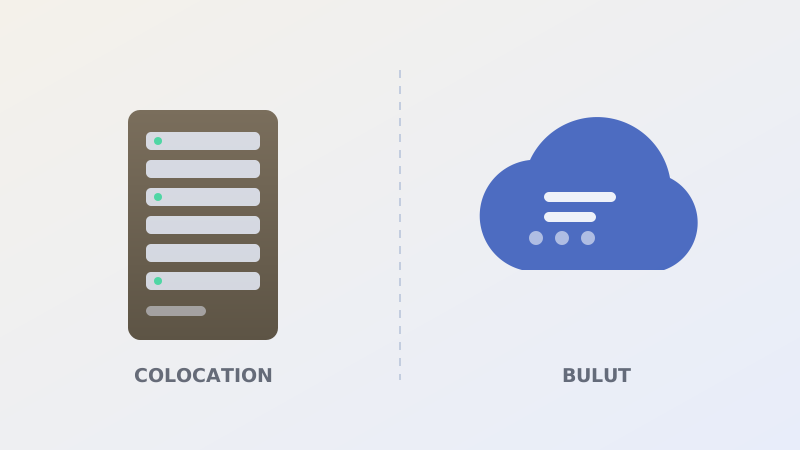
The question "should we take colocation or move to the cloud?" is usually framed incorrectly. They are not alternatives to one another; they are answers for different workloads. Most organisations end up using both.
1. Variability of the workload. If your resource requirement is flat across the year, colocation is generally more economical. If load multiplies during peak periods and then falls away, cloud elasticity translates directly into cost advantage.
2. Age of existing hardware. If you have recently refreshed hardware still being depreciated, there is no sense in discarding it. Colocation preserves the existing investment while new workloads go to the cloud.
3. Compliance and audit requirements. Some regulations require hardware to be physically dedicated to you. In those cases colocation or private cloud becomes the answer; shared cloud may not be suitable.
4. Team capacity. With colocation the hardware is your responsibility: failures, warranties, spare parts, firmware. Without a team to run that, total cost of ownership is higher than it appears.
5. Required speed of deployment. If a new project must be live within weeks, hardware lead time alone can decide the matter. In the cloud that time drops to hours.
The arrangement we see most often in practice: low-variability, data-heavy core systems in colocation; test, development, seasonal load and disaster recovery in the cloud. This hybrid model balances both cost and flexibility.
Before deciding, we recommend measuring your actual resource usage with at least three months of data. Capacity planning based on estimates results in overpayment under either model.